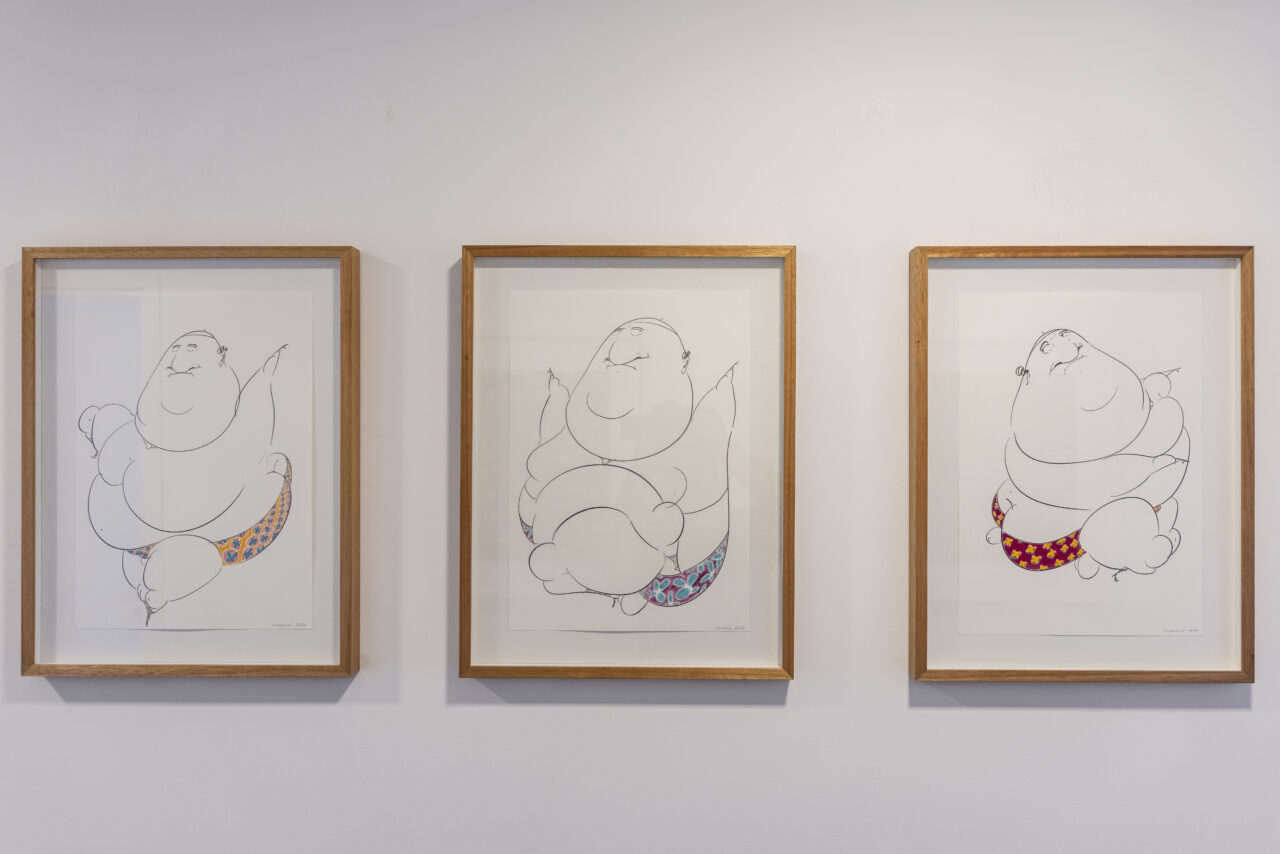
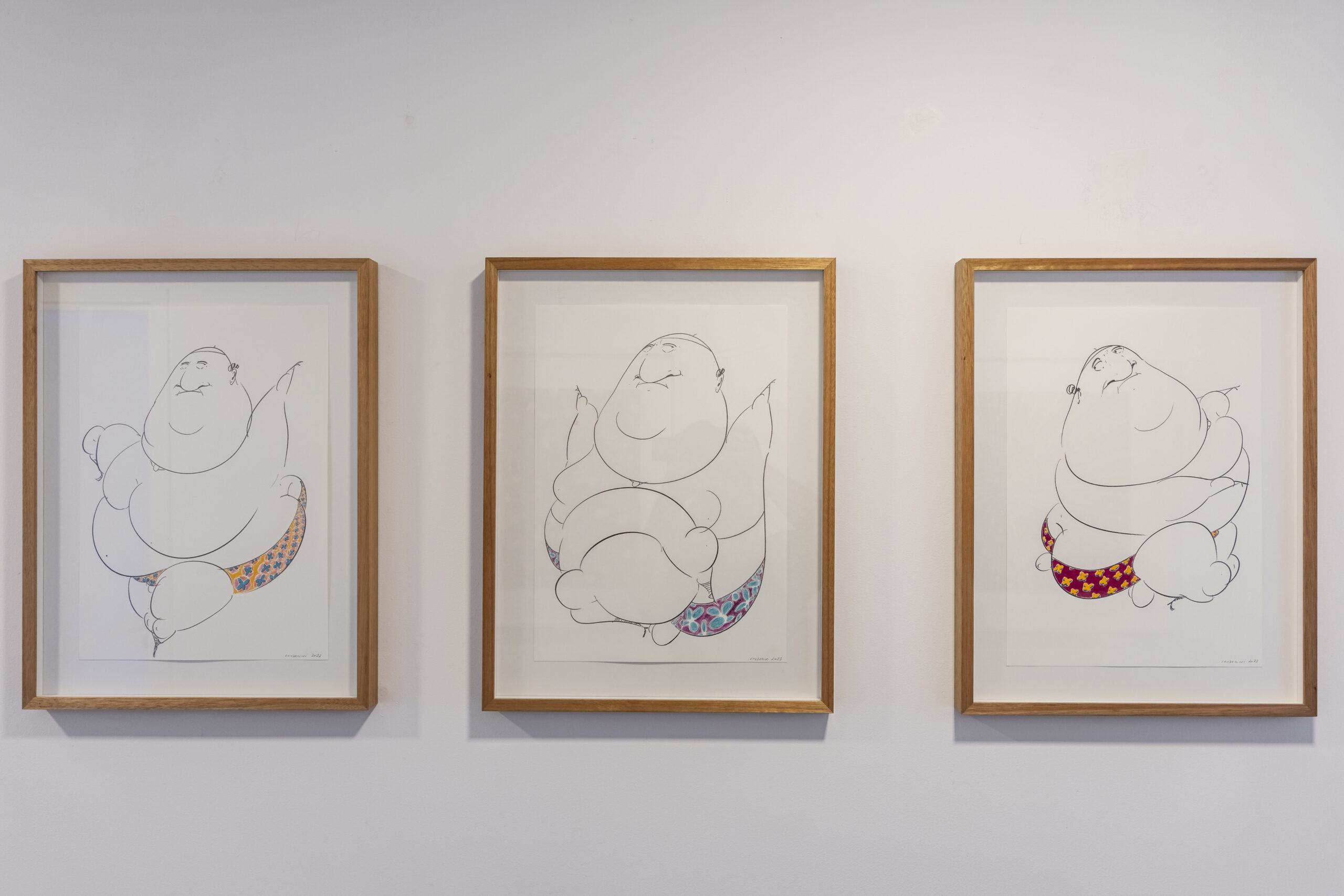
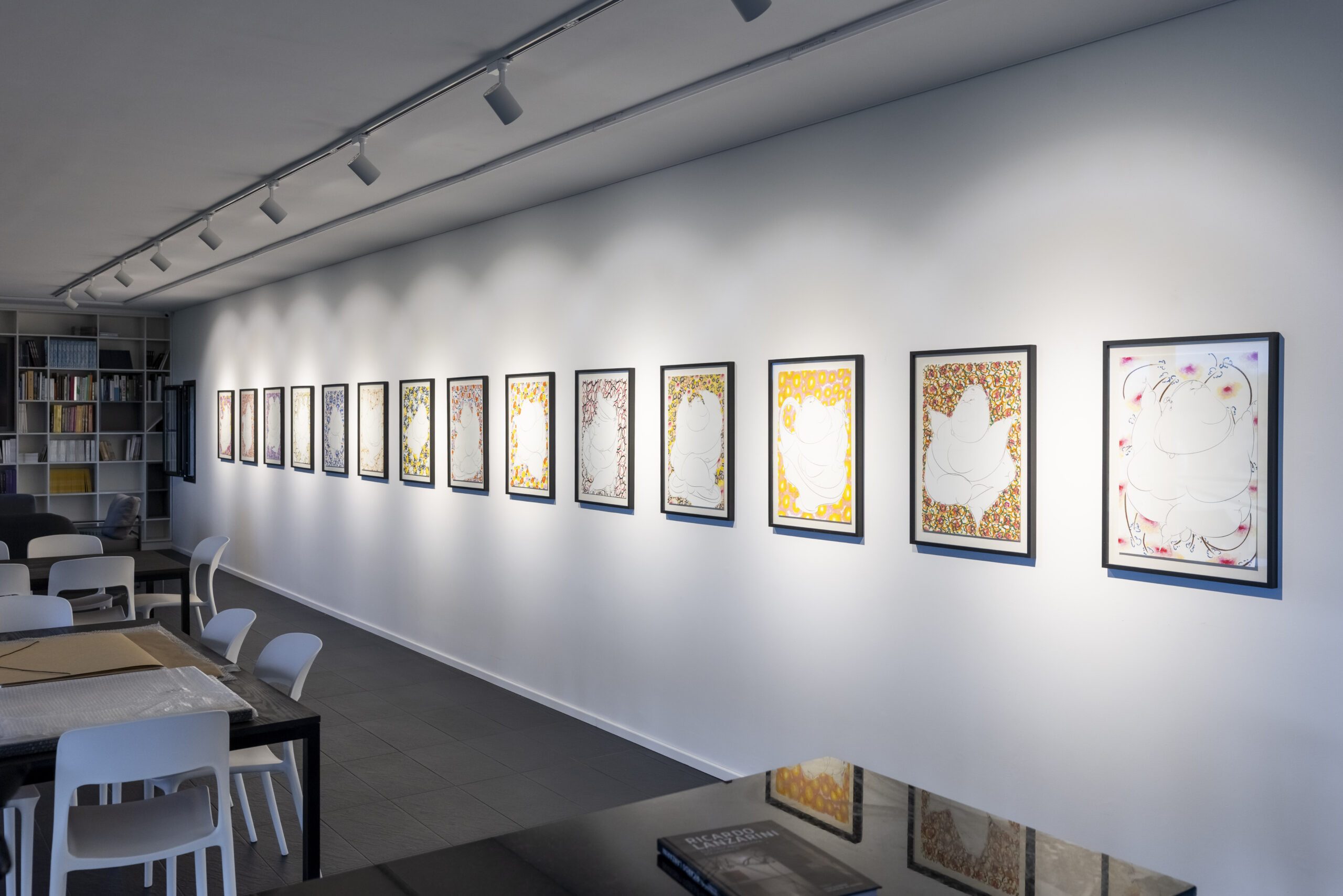
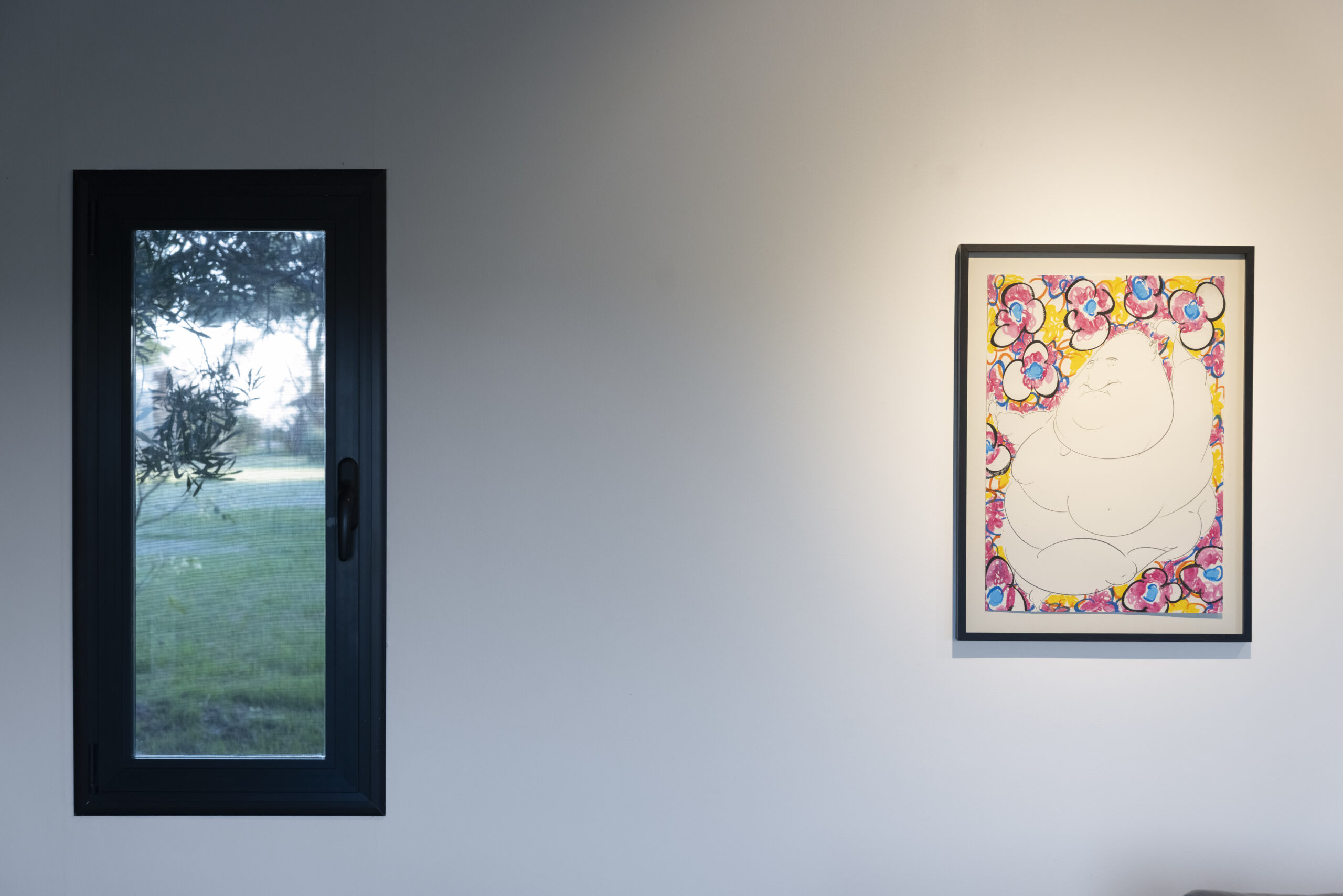
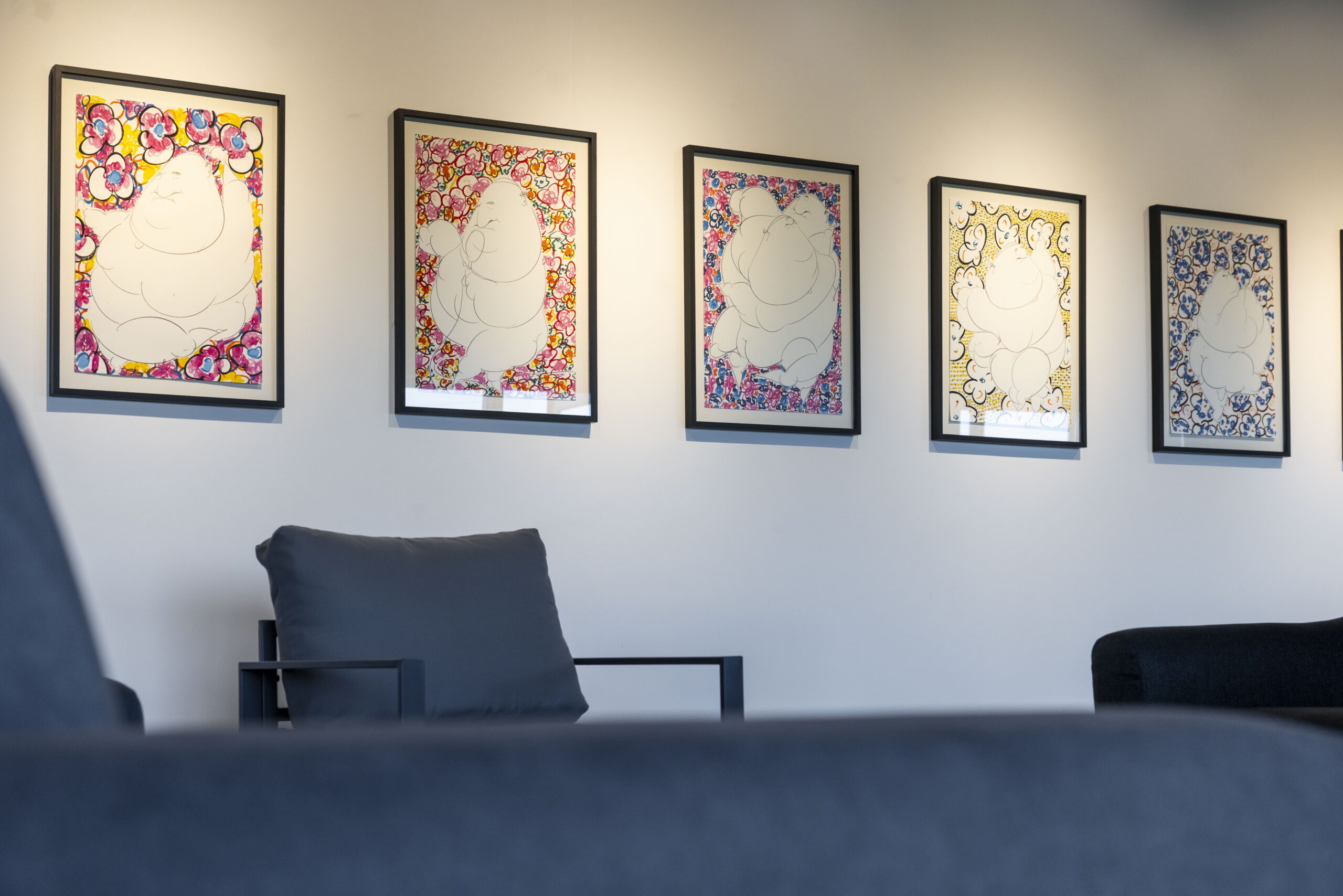
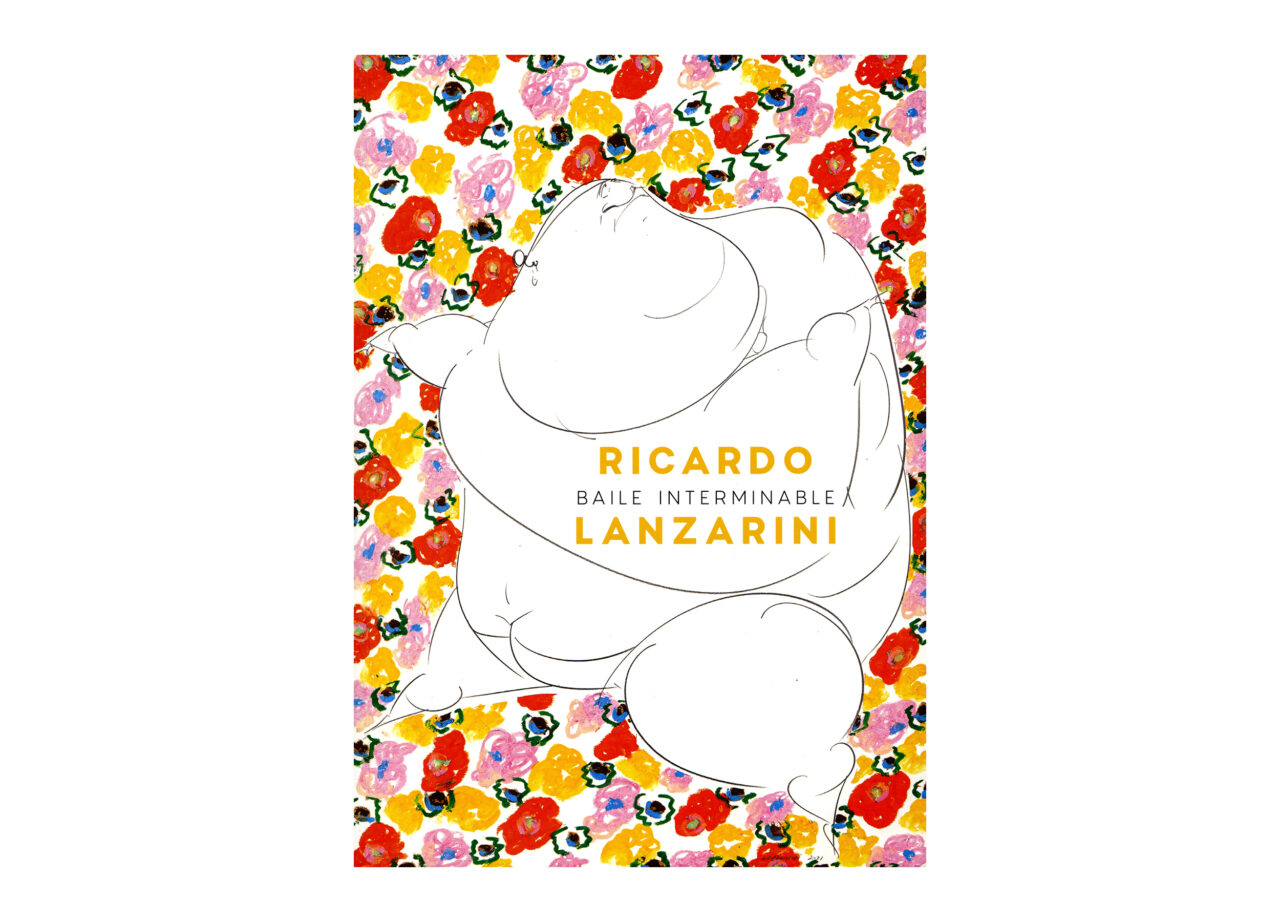
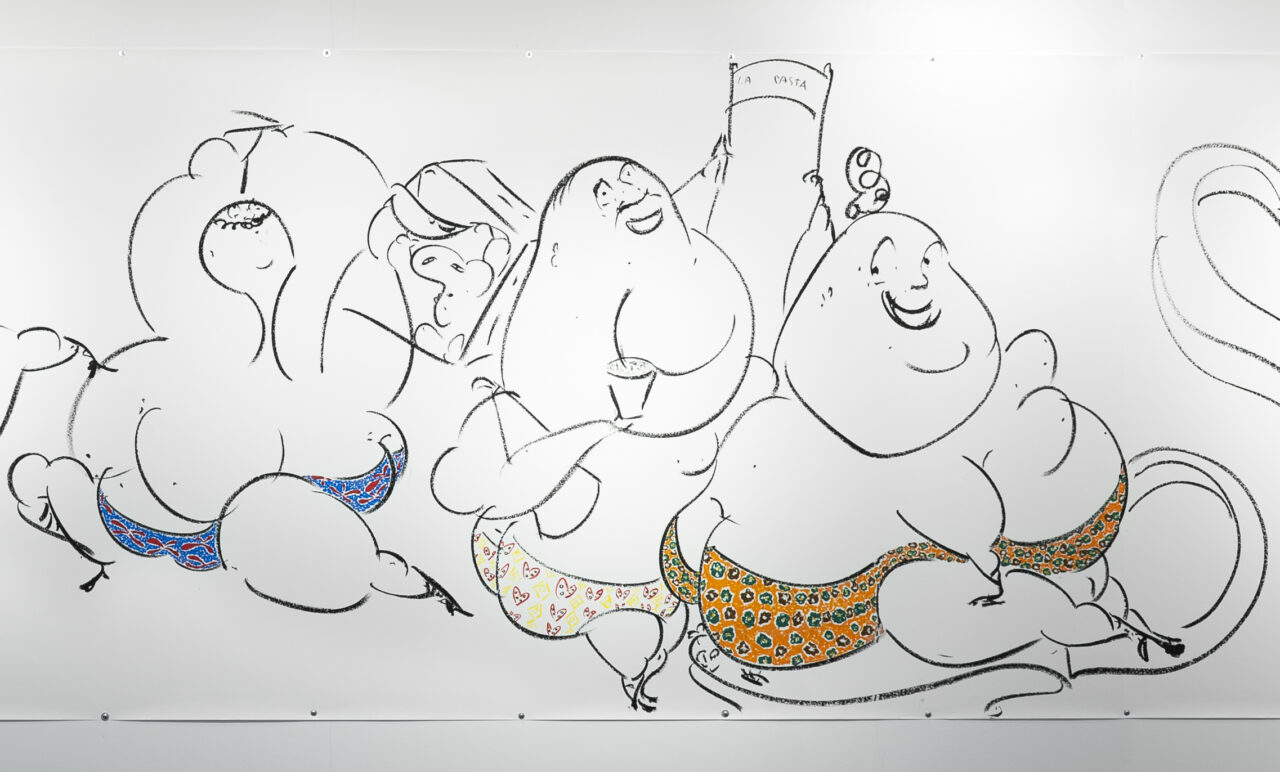
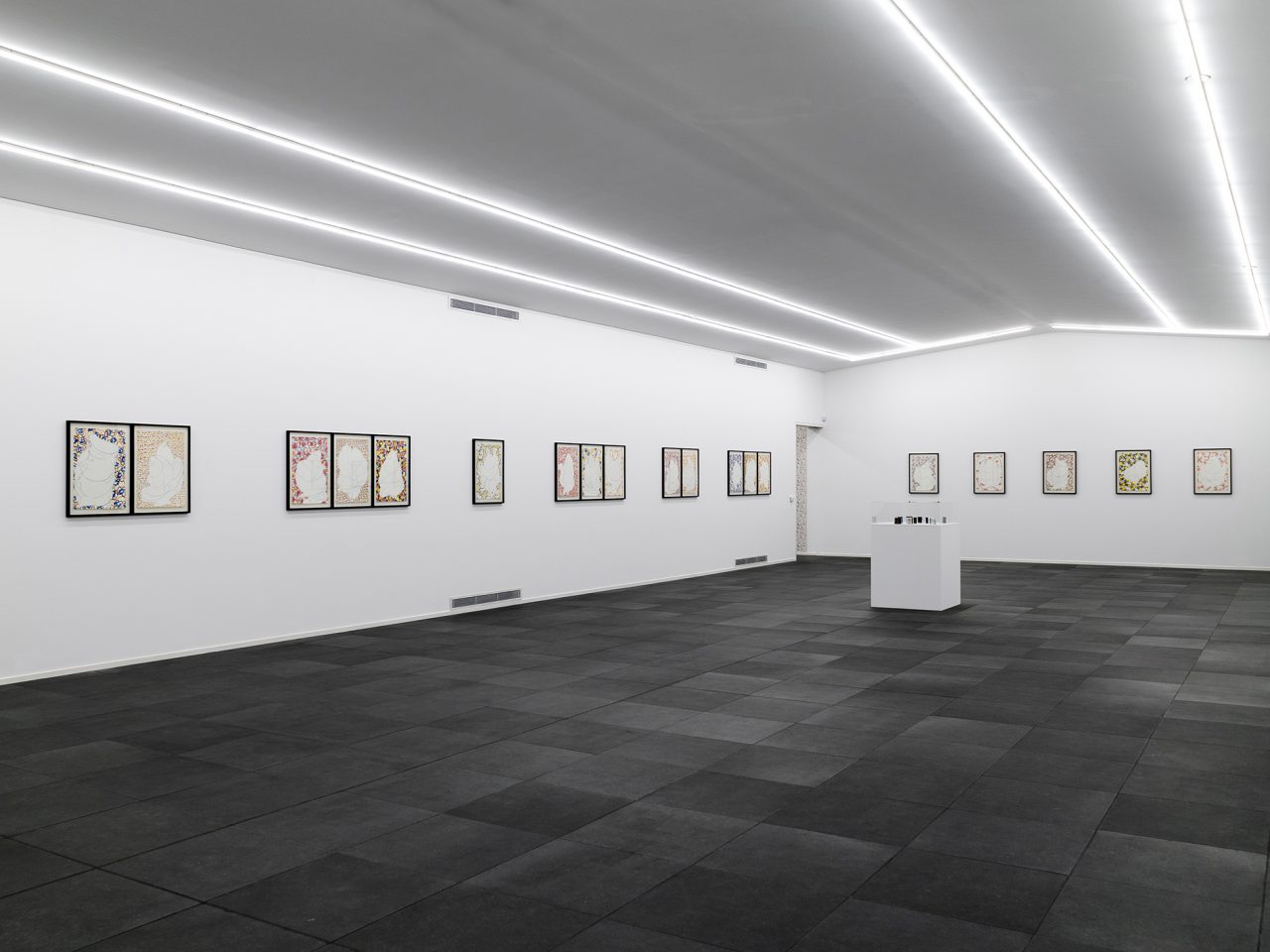
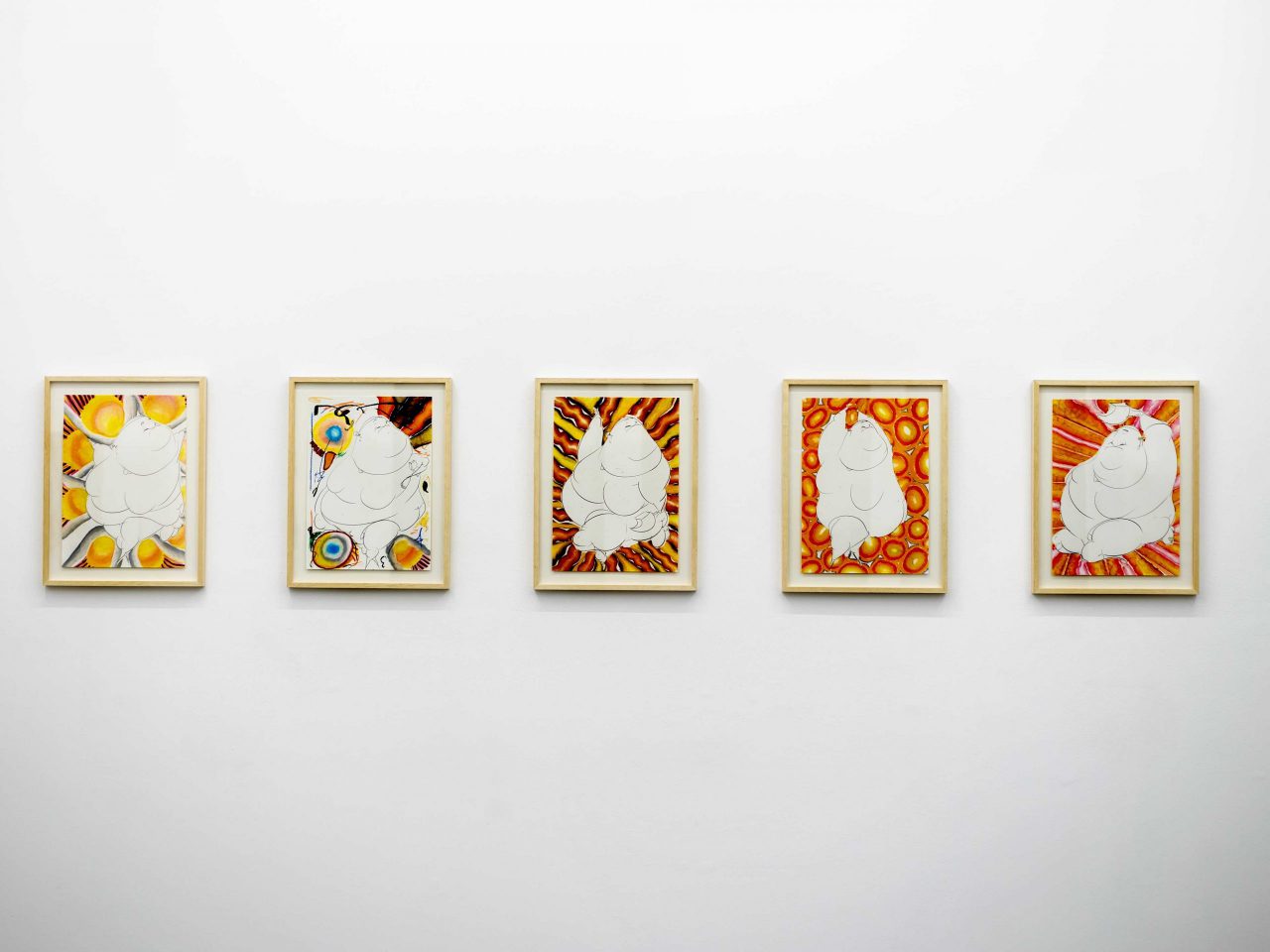
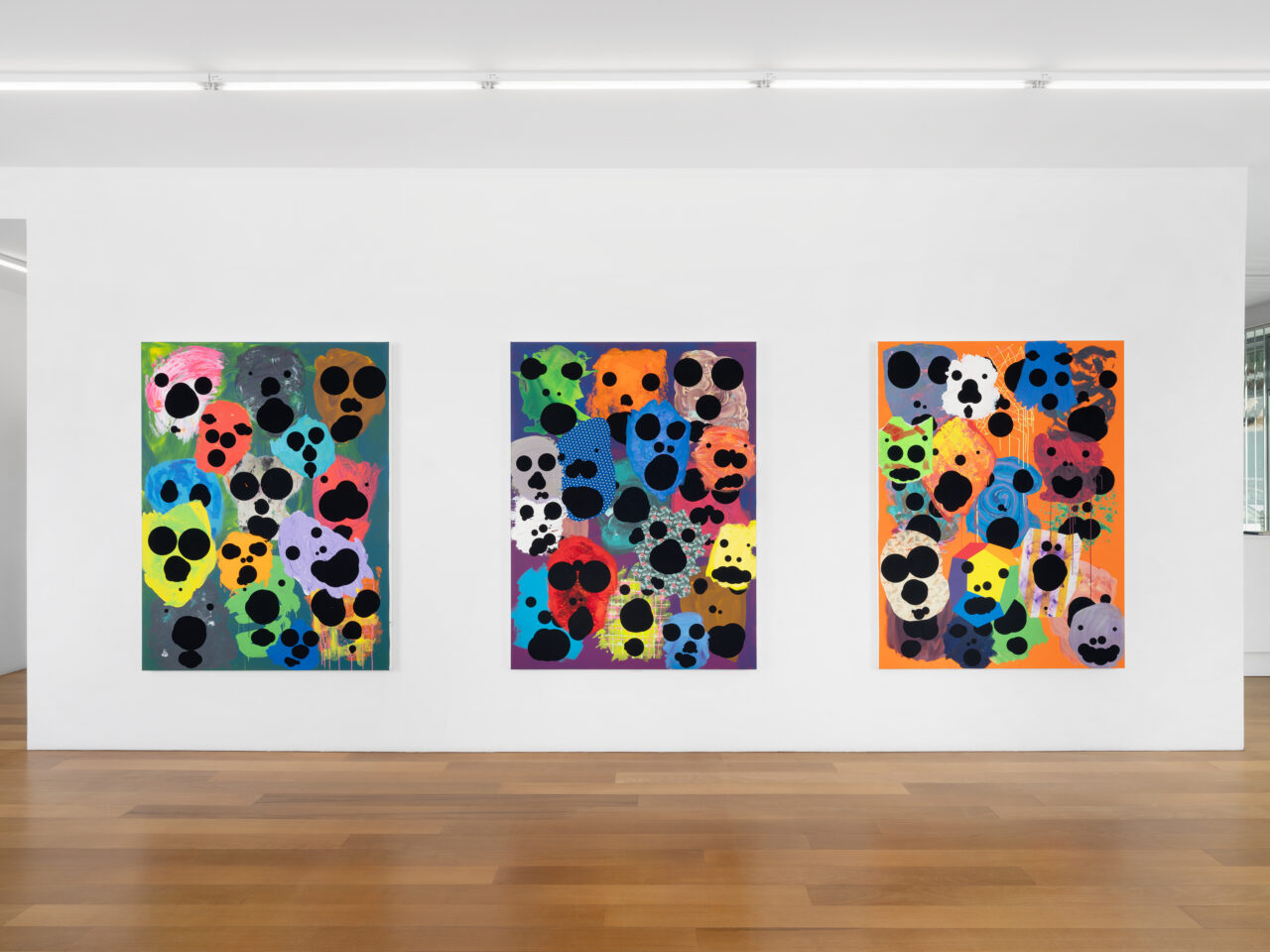
The precision of the line and its open succession of strokes is counterbalanced by a disfiguration, an amorphism, a deliberate play of ambiguities in the representation of the figures and their bodily attributes. These no longer correspond to a physical state, but rather to a moral condition that is calligraphically inscribed. In other words, the figurative de-structuring of the symbolic subject is consistent with the sordidness of the metaphor that underpins it—and, one might add, equally consistent with the mysterious love-hate relationship that binds it to the artist.
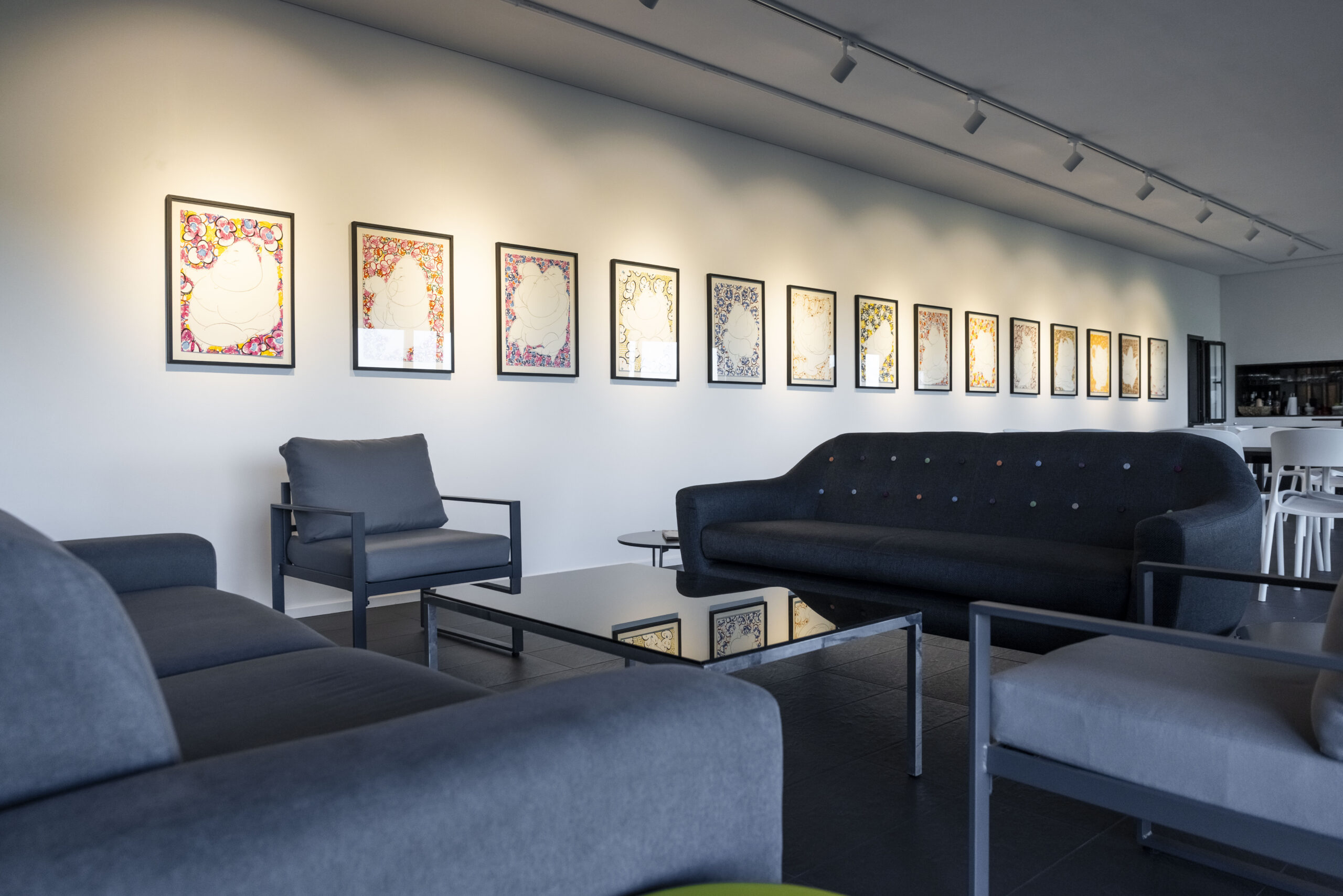
The electricity that flows through these images is not given solely by chromatic intensity. It responds, above all, to the double sign of a political space enacted on paper, to a kind of contradiction between two fields of force: the expansive and the implosive. This cyclical variation of meaning, which the gaze apprehends intermittently, constitutes the principle of an alternating current that runs through and unsettles each of the scenes in this endless dance.