Leandro Erlich

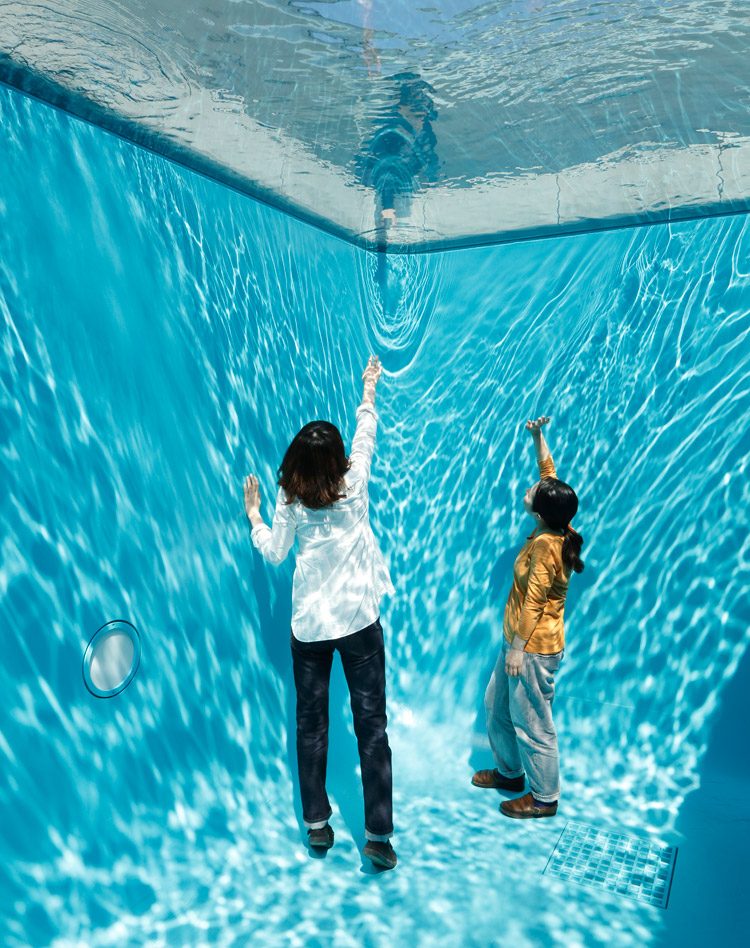


Swimming Pool
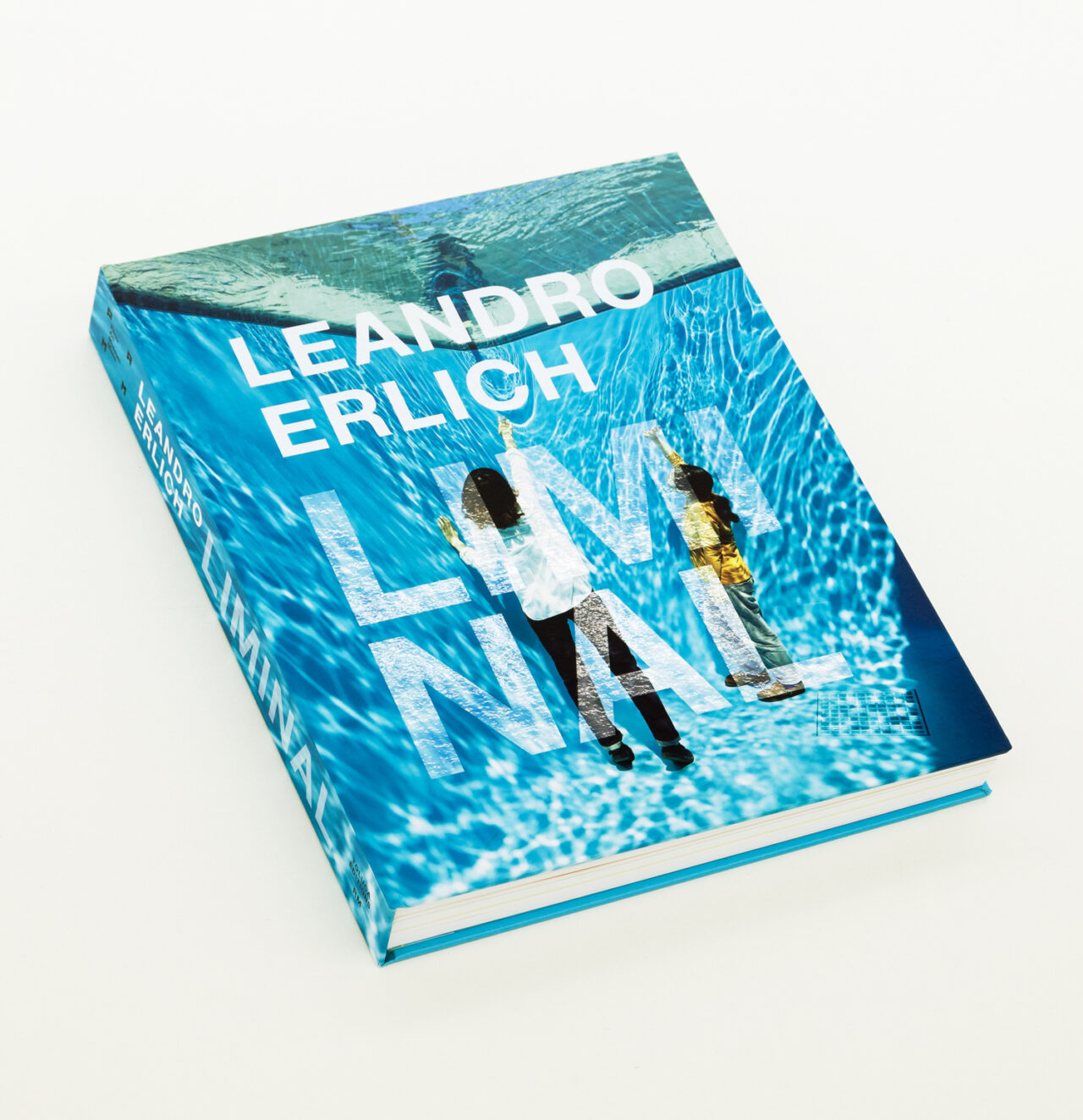
Swimming Pool was first created in 1999 at The Museum of Fine Arts, Houston, as part of the CORE program, then exhibited as Argentina’s entry for the 49th Venice Biennale. It was shown in 2008 at MoMA PS1 in Long Island City, Queens, and installed permanently at both the 21st Century Museum of Contemporary Art, Kanazawa, Japan, and, later, at the Museum Voorlinden in the Netherlands.
Swimming Pool introduces a narrative dimension built around a multifaceted experience in which the viewer becomes all at the same time an active participant, interpreter and a viewer (or witness) of the roles others play.
Bâtiment
First created in 2004 for the Nuit Blanche in Paris, Bâtiment has been staged all over the world, always incorporating local architecture in each iteration. The installation was shown again in Paris in 2026 on the occasion of Leandro Erlich’s solo exhibition at the Grand Palais.
While the premise of this work remains the same, the changing facades create a visual dialogue with its participants. This installation relies on a large-scale mirror placed at a 45-degree angle over the illusory building façade on which spectators arrange themselves, in an act of performance sparked by this situation’s very impossibility.


The Cloud
The cloud brings the natural world inside, collapsing and expanding the relationship between land and sky. Several panes of printed glass, layered together, depict a multidimensional cloud. As often occurs in Erlich’s work, an object that we imagine to be solid or whole is only the accumulation of emptiness. This presentation reminds us of nature’s delicate beauty and its capacity for change; it also opens the door to what scientists and philosophers have suggested about the essence of matter and the intricate separations that comprise our world.


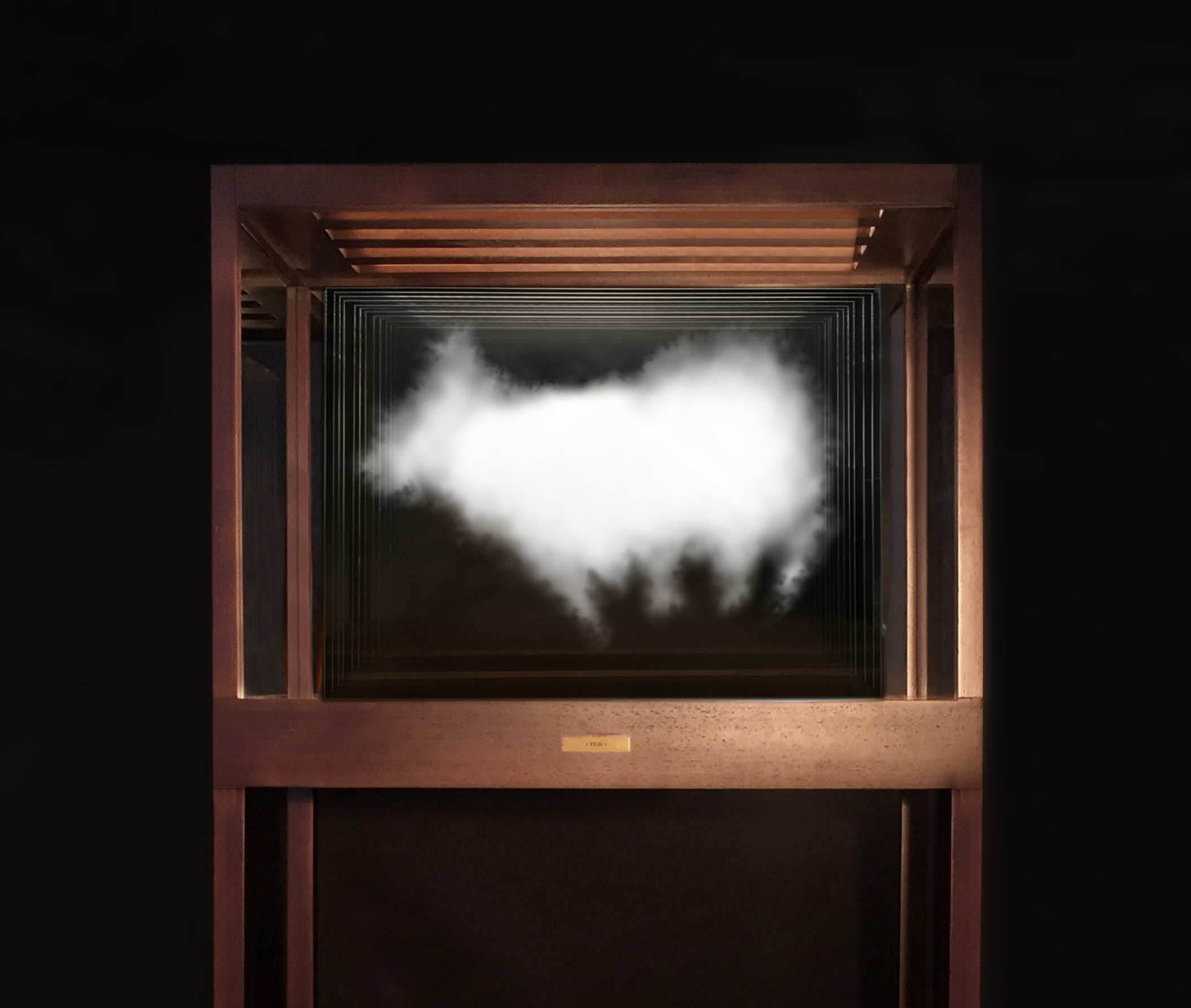
I like to think of clouds as the very first form of human art. Before we sculpted clay or drew figures on cave walls, the human mind made sculptures out of vapor and wind.
— Leandro Erlich

Hybrids
What is a butterfly whose wings are ears, if not the most accurate definition of a radio? And a brain turned into a snail, if not the image of evolution itself?
Leandro Erlich’s work dismantles the belief that things possess a fixed, transparent nature. Art and design never cease to transform the essence of the world. Everything inhabits everything else, turning the world into a vast, metamorphic dance where all forms intermix. Erlich’s sculptures, far from trompe-l’oeil or Magritte’s paradoxes, visualise this inner transformation – the hidden physiology of every authentic creative act. Art does not decorate the world; it continues its creation, extending the profound processes that have shaped life and matter.


Traffic Lights: Civilization or Barbarism
We consider the trafffic light a central feature of modern life, its three colors a fixture of the urban landscape. Originally a technological marvel, these everyday companions govern the human flux through major cities and towns. As simple as they appear,
without them we would be at sea, lost in a sea of traffic. Daily, we stop and go in response to their changing colors, in passive synch with their signals. This installation reimagines the traffic light within the rural town of Garzón (Where there are no spotlights nor any need for them) referencing the famous title of Domingo Sarmiento’s Facundo: Civilization and Barbarism. Sarmiento’s landmark work juxtaposed European cosmopolitalism and education with what Sarmiento considered the barbarous and savage wilds of
the Argentine Pampa and its caudillos.

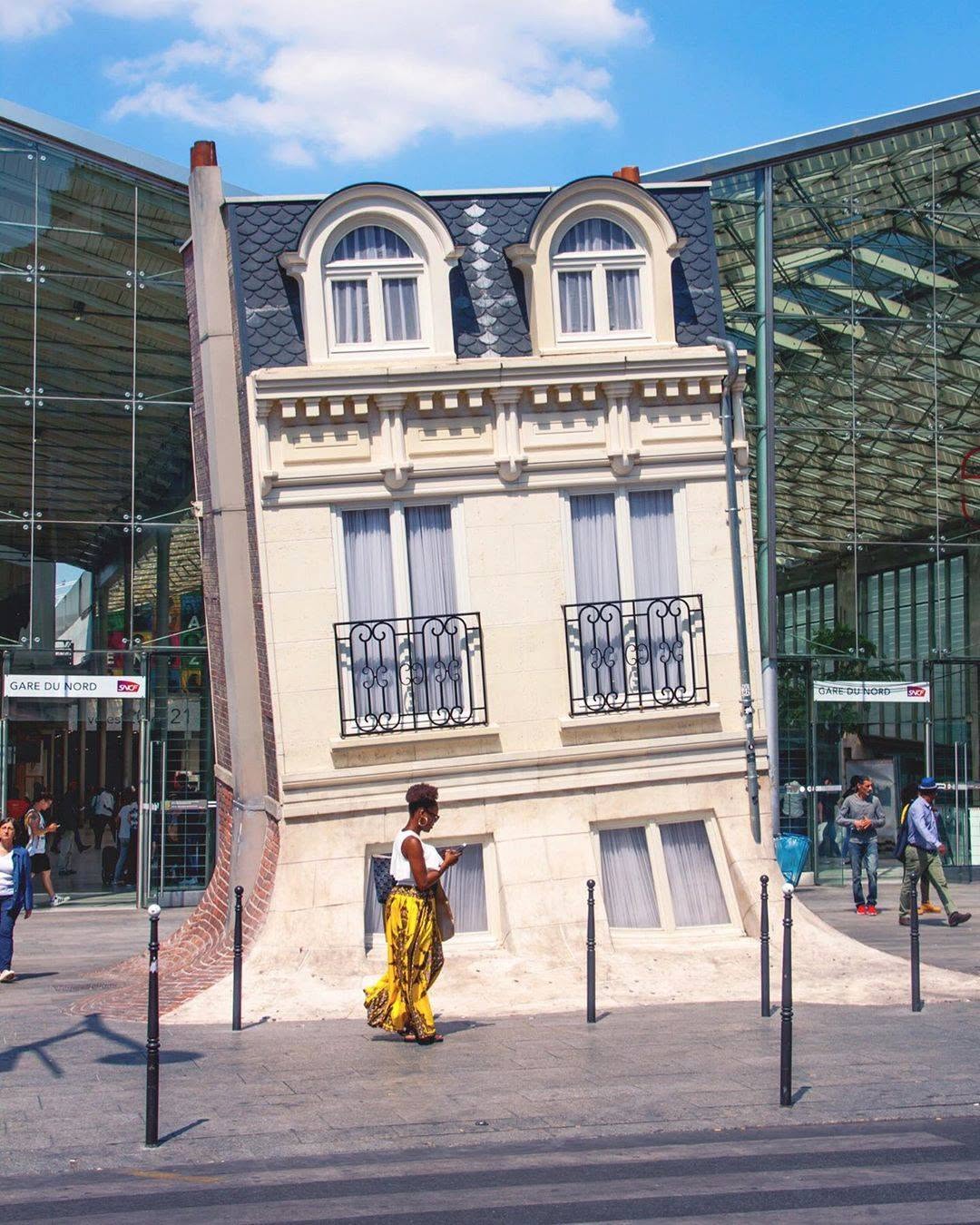
Maison Fond, Nuit Blanche, 2015
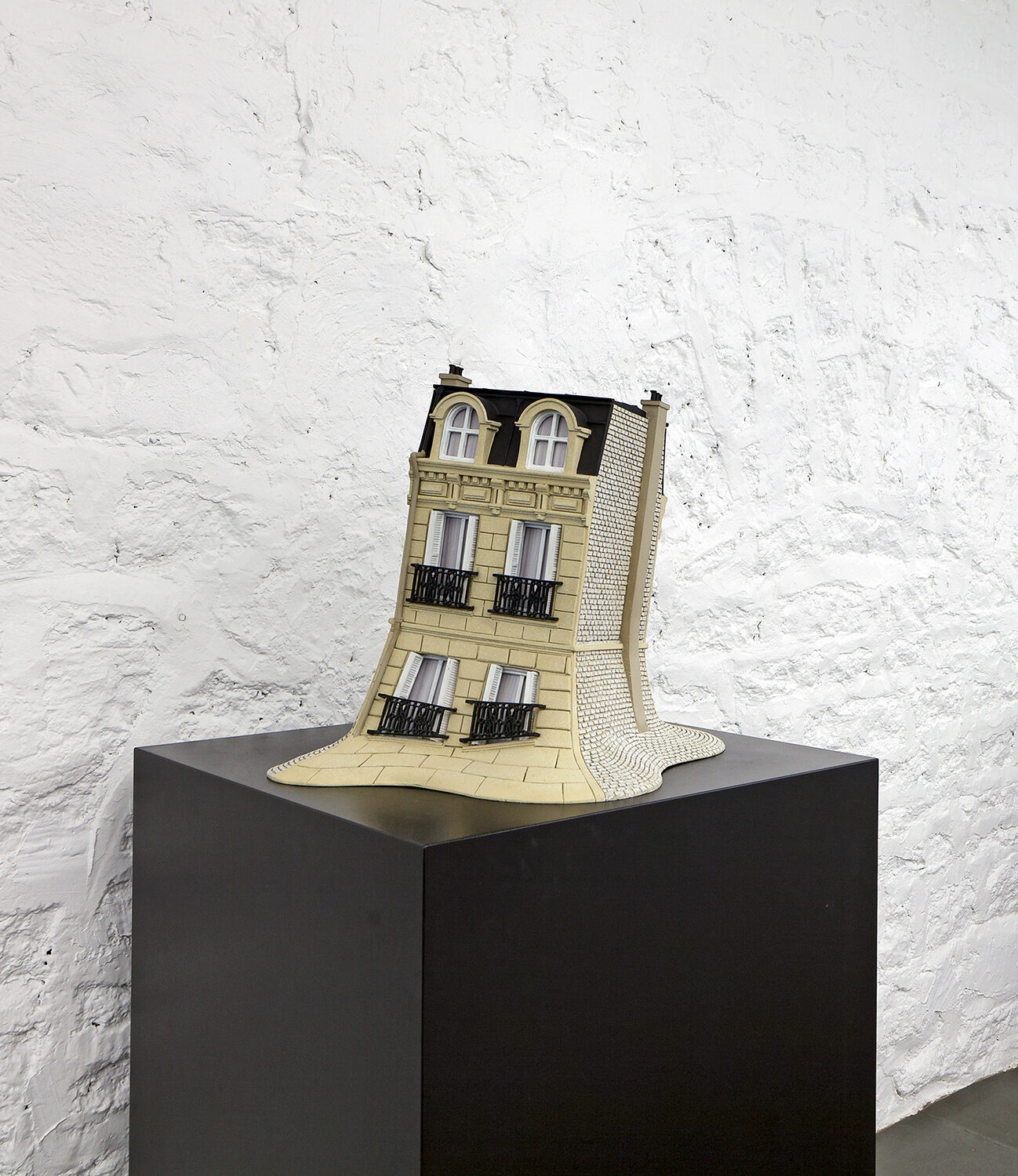
This work was commissioned by the City of Paris and installed at the Gare du Nord railway station during the 2015 United Nations Climate Change Conference, where 196 countries negotiated the landmark Paris Agreement. In an effort to engage the general public, Erlich relied on a familiar visual lexicon for this work, “melting” a typical Parisian building, a structure as familiar and reliable as the daily commute. Maison Fond leans into literalism to illustrate a stark reality. The forces of global warming will reshape all our lives, as the poles melt and ocean rise. In French, the title Maison Fond phonetically invokes “mes enfants” or “my children”, referencing the generation that will bear the brunt of some of the worst effects of climate change. This warming, melting ofnpermafrost, and rising sea levels bear a direct impact on our common house, the planet we share, and all those places we hold as inviolable and safe. Both arresting and accessible, this installation touches on the universality of impermanence and the specific and urgent dilemmas we face as a species. We can continue walking past on our busy commute or stop and acknowledge this global imperative.
Conversation between Leandro Erlich and Fabrice Bousteau on the occasion of his exhibition “De l’ascenseur à l’escargot” at Xippas Geneva